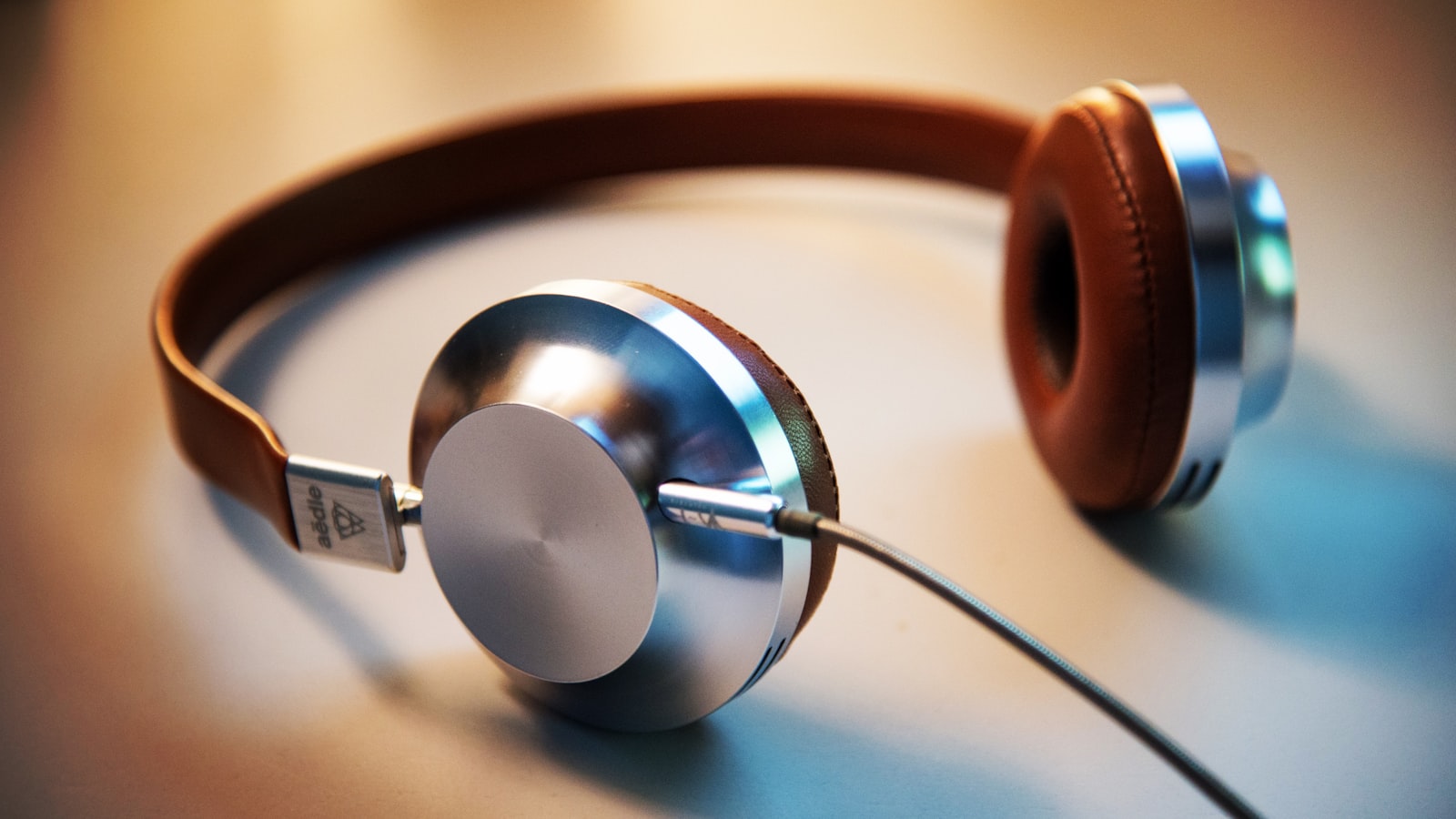
Pick up almost any pair of headphones in 2026 and you face a quiet little decision before you even press play: do you want a cable, or not? It sounds trivial. It is not. The cable — or its absence — quietly shapes how the headphones sound, how long they last, how much they cost over their lifetime, and how they fit into your day. None of that means one type is "better." It means they're built around different priorities, and the right pick depends on what you actually do with them.
Let me walk you through the real trade-offs, calmly and without the marketing gloss. By the end you should be able to look at your own routine and know which side of the line you're on.
Sound: closer than the arguments suggest#
There's an old belief that wired always sounds better. It used to be a safer bet than it is now. Wired headphones pass an analog signal straight through, with no wireless compression in the path, which historically gave them an edge in fidelity. That edge still exists in principle, but for most listeners on most music it has narrowed to the point of being hard to notice.
Modern wireless headphones use Bluetooth codecs — the rules that compress and rebuild audio on the way across — and the better ones are genuinely good. What matters more than wired-versus-wireless is the quality of the drivers, the tuning, and the fit on your head. A well-made wireless pair will easily out-perform a cheap wired one.
Where wired keeps a clear, practical advantage is at the high end and in critical work. If you're mixing audio, or you own demanding headphones that want a dedicated amplifier, a cable removes a whole layer of variables. For casual listening, podcasts, and commuting, that gap is mostly academic.
Latency: the one place wireless still stumbles#
Latency is the delay between a sound being sent and your ears hearing it. Over a cable it's effectively zero. Over Bluetooth there's always some delay, because the audio has to be compressed, transmitted, and rebuilt.
For music and podcasts this does not matter at all — your brain has no reference point to notice it. It starts to matter when sound needs to line up with something you can see:
- Video and film: most modern devices compensate well, so lips usually stay in sync.
- Fast-action gaming: here even small delays can feel off, and competitive players often still reach for a cable.
- Music production or instrument practice: wired is the dependable choice when timing has to be exact.
If none of those describe you, latency is not a reason to avoid wireless.
Convenience and battery: the daily reality#
This is where wireless earns its popularity, and honestly, it deserves it. No cable means no snagging on door handles, no tangle in your bag, and the freedom to leave your phone on the desk while you wander to the kitchen. For workouts, chores, and moving around a home or office, that freedom changes how often you actually reach for them.
The cost is upkeep. Wireless headphones have a battery, and a battery is one more thing to remember. You'll charge them. Occasionally you'll pick them up flat at exactly the wrong moment. You'll navigate pairing menus when switching between a laptop and a phone, and now and then a connection will drop for no obvious reason and reconnect just as mysteriously.
Wired headphones ask nothing of you between listening sessions — you plug in and they simply work, which is its own kind of luxury.
That dependability is the wired pitch in a sentence. No charging, no pairing, no codec questions. The trade is the cable itself: the tangle, the tug, and the growing number of phones and laptops that have dropped the headphone jack, which may mean carrying an adapter.
Repairability and how long they last#
Here's a factor people rarely weigh at the counter, and it's the one I'd encourage you to think about most. A wireless pair contains a rechargeable battery, and every rechargeable battery slowly loses capacity over years of use. Eventually a once all-day pair only lasts a few hours. If the battery is sealed in and not replaceable — and many are — that can quietly decide the lifespan of the whole product, even when the drivers are still perfect.
Wired headphones sidestep this entirely. There's no battery to age out. Many wired designs also use a detachable cable, which means the single most common failure point — a frayed or shorted lead — becomes a cheap, simple swap rather than a reason to replace everything. Some let you replace ear pads and headbands too. Fewer electronic parts generally means fewer things that can break.
None of this is a hard rule. There are beautifully built wireless pairs and flimsy wired ones. But as a tendency, wired designs are friendlier to long ownership, and that's worth knowing if you keep gear for years rather than months. Specifics like battery life, replaceable parts, and repair options vary widely between products and change over time, so check the manufacturer's details before you commit.
So which suits you?#
Think about your dominant use, not the edge cases.
Lean wireless if you move around a lot, value a clutter-free desk and bag, listen mostly to music and podcasts, and don't mind a small charging habit. For workouts, commutes, and general daily life, the convenience is real and the sound is more than good enough.
Lean wired if you do critical listening or audio work, play fast competitive games, want the simplest possible "plug in and go" experience, or you're optimizing for something that lasts many years with minimal fuss.
And there's no rule that says you must choose just one. Plenty of people keep a comfortable wired pair at the desk and a wireless pair for moving around. They're tools for different moments.
Whatever you land on, buy for the way you actually live — not the spec sheet that looks most impressive. The best headphones are the ones you reach for without thinking, and that has very little to do with whether there's a cable attached.