
Sound is deeply affected by the environment around it. Temperature and humidity play crucial roles in how acoustic waves travel, resonate, and ultimately reach our ears. 🎵

The Invisible Forces Shaping Your Acoustic Experience
Every musician, audio engineer, and sound enthusiast has experienced it: the same instrument or speaker system sounds different from one day to the next. Sometimes the bass feels tighter, other times the highs seem sharper. While equipment quality matters, environmental factors like temperature and humidity are often the hidden culprits behind these sonic variations.
Understanding how atmospheric conditions influence sound propagation isn’t just academic knowledge—it’s practical information that can help you optimize recording sessions, live performances, and even your home listening environment. The physics behind these phenomena reveal fascinating insights into how we experience music and audio.
How Sound Travels Through Air: The Foundation
Before diving into environmental impacts, we need to understand the basics of sound propagation. Sound travels as pressure waves through air molecules. When you pluck a guitar string or strike a drum, it vibrates and pushes air molecules, creating compressions and rarefactions that travel outward as waves.
The speed at which these waves travel depends entirely on the medium’s properties. In air, that medium is constantly changing based on temperature, humidity, pressure, and composition. These variations directly affect how quickly sound moves and how it behaves when encountering surfaces, objects, or open spaces.
The Speed of Sound Isn’t Constant
Most people learn that sound travels at approximately 343 meters per second (1,125 feet per second) at sea level. However, this figure assumes a temperature of 20°C (68°F) with moderate humidity. Change these conditions, and the speed of sound changes too—sometimes dramatically.
This variability isn’t just a theoretical concern. In practical applications, from concert hall acoustics to outdoor festivals, these differences can affect timing, phase relationships, and the overall sonic character of what we hear.
Temperature’s Direct Impact on Acoustic Performance 🌡️
Temperature is perhaps the most significant environmental factor affecting sound propagation. As temperature increases, air molecules gain kinetic energy and move faster. This increased molecular activity allows sound waves to travel more quickly through the medium.
The relationship is quite predictable: for every degree Celsius increase in temperature, sound speed increases by approximately 0.6 meters per second. At 0°C (32°F), sound travels at about 331 m/s, while at 30°C (86°F), it travels at roughly 349 m/s—a difference of about 5%.
Why Musicians Notice Temperature Changes
For string instruments, temperature affects both the materials and the surrounding air. Warmer temperatures cause strings to expand slightly and tension to decrease, lowering pitch. Simultaneously, the wood of acoustic instruments expands, potentially changing resonant frequencies and tonal characteristics.
Wind instruments face even more pronounced challenges. The air column inside a brass or woodwind instrument responds directly to temperature. In cold conditions, instruments play flatter; in heat, they play sharper. Professional orchestras often tune to different reference pitches depending on the venue’s temperature.
Impact on Electronic Sound Systems
Even electronic speakers and microphones aren’t immune to temperature effects. The speed of sound influences how speaker arrays synchronize, how delays should be calculated, and how standing waves form in rooms. Sound engineers must adjust their systems when moving between temperature-controlled studios and outdoor venues.
Microphone capsules can also exhibit sensitivity changes with temperature, particularly condenser microphones with their delicate diaphragms and electronics. This is why professional studios maintain strict climate control.
Humidity: The Overlooked Acoustic Variable 💧
While temperature gets most of the attention, humidity plays an equally important role in sound quality. Water vapor in the air actually changes the air’s density and its acoustic properties in complex ways.
Counterintuitively, humid air is less dense than dry air at the same temperature and pressure. Water molecules (H₂O) are lighter than the nitrogen (N₂) and oxygen (O₂) molecules they displace. This means sound actually travels slightly faster in humid conditions—though the effect is less pronounced than with temperature changes.
High-Frequency Absorption: The Critical Factor
The most noticeable effect of humidity on sound isn’t speed but absorption, particularly of high frequencies. Dry air absorbs high-frequency sound energy much more efficiently than humid air. This is why environments with low humidity often sound “deader” or less vibrant, especially in the treble range.
In recording studios, humidity levels between 40-60% are typically maintained not just for equipment protection but for optimal acoustic properties. Too dry, and recordings lose sparkle; too humid, and the environment may create other acoustic irregularities.
The Science Behind Frequency-Dependent Absorption
When sound waves travel through air, some energy is lost through molecular friction and relaxation processes. In dry air, oxygen and nitrogen molecules absorb energy from sound waves more efficiently, particularly at higher frequencies. Water vapor interferes with these absorption mechanisms, allowing high frequencies to travel farther.
This phenomenon explains why outdoor concerts on humid summer evenings often sound brighter and more present than performances on dry winter nights. The treble frequencies simply survive the journey to the audience better when humidity is higher.
Combined Effects: When Temperature Meets Humidity
In real-world scenarios, temperature and humidity don’t operate independently—they interact in ways that compound their individual effects. A hot, humid day creates very different acoustic conditions than a hot, dry day, even though the temperature might be identical.
The dew point—the temperature at which air becomes saturated with moisture—becomes particularly relevant for outdoor events. As evening approaches and temperature drops toward the dew point, humidity’s relative impact increases, potentially creating noticeable sonic shifts during performances.
Seasonal Acoustic Variations
Different seasons create characteristic acoustic environments:
- Summer: High temperature and humidity generally create faster sound propagation with extended high-frequency response, but potential for greater atmospheric turbulence affecting outdoor sound
- Winter: Cold, dry air slows sound and absorbs high frequencies more aggressively, creating a duller acoustic environment
- Spring/Fall: Moderate conditions with higher variability, requiring frequent adjustments for critical listening or performance environments
- Tropical climates: Consistently high humidity maintains bright sound characteristics year-round but presents challenges for instrument stability
Practical Applications for Audio Professionals 🎚️
Understanding these principles enables sound engineers and musicians to make informed decisions. Professional audio work requires accounting for environmental conditions in ways that casual listeners might never consider.
Studio Design and Climate Control
Recording studios invest heavily in HVAC systems not just for comfort but for acoustic consistency. Maintaining stable temperature (typically 20-22°C) and humidity (40-60%) ensures that recordings made on different days have comparable acoustic characteristics.
Many high-end studios include hygrometers and temperature monitors as standard equipment, with some even logging environmental data alongside session notes for reference during mixing and mastering.
Live Sound Adjustments
Outdoor festival engineers arrive hours before performances to measure temperature and humidity, then calculate adjustments for speaker delay times and equalization. A 10-degree temperature difference might require delay adjustments of several milliseconds across large venues—enough to affect sound clarity and impact.
Indoor venues present different challenges. Large crowds raise both temperature and humidity significantly. Savvy engineers prepare for these changes, sometimes adjusting systems between soundcheck and performance to account for the audience’s environmental impact.
Optimizing Your Personal Listening Environment
Even if you’re not a professional, these principles apply to home audio systems and personal music spaces. Creating optimal acoustic conditions doesn’t require expensive equipment—just awareness and simple adjustments.
Home Studio Considerations
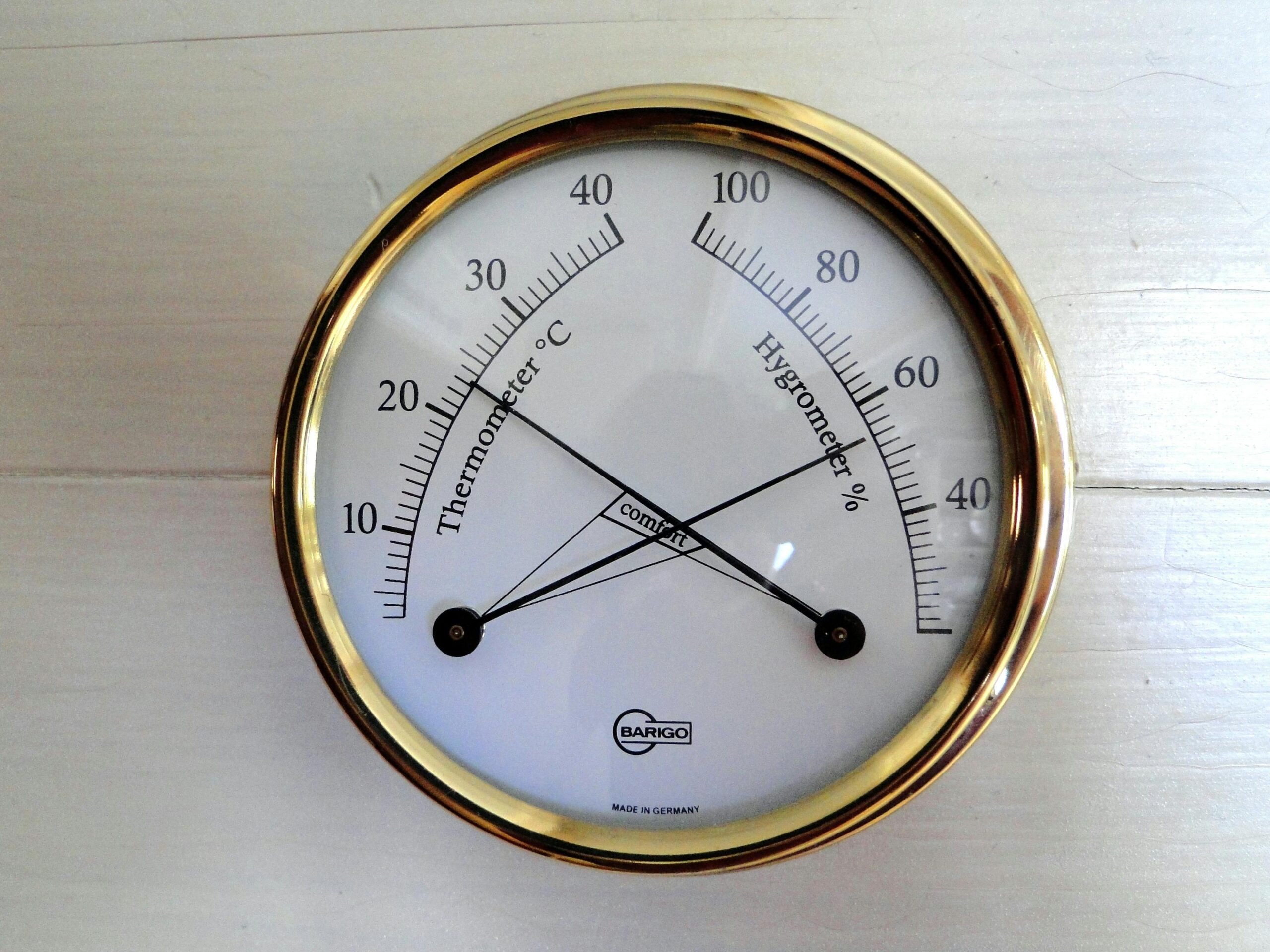
For home recording enthusiasts, a simple digital thermometer-hygrometer combination provides valuable information. If you notice your recordings sound different across sessions, environmental factors may be responsible. Tracking these variables helps identify patterns and maintain consistency.
Simple solutions like portable dehumidifiers or humidifiers can stabilize your recording environment without major investment. Even basic climate awareness helps you understand why that guitar track recorded in winter sounds different from the one captured in summer.
Instrument Care and Performance
Musicians should store acoustic instruments in stable environments. Rapid temperature or humidity changes cause wood to expand and contract, potentially leading to cracks, warping, or joint separation. Maintaining conditions between 18-24°C with 40-60% humidity protects instrument integrity while optimizing acoustic performance.
For guitar players, hygrometer-equipped cases provide peace of mind. Many professionals use two-way humidity control systems that automatically maintain optimal moisture levels, protecting valuable instruments while ensuring consistent playability and tone.
The Role of Air Pressure and Altitude
While temperature and humidity dominate the discussion, atmospheric pressure also affects sound propagation. At higher altitudes where pressure is lower, sound travels more slowly. This matters less for most applications but becomes relevant for outdoor venues at significant elevations.
Wind instruments are particularly sensitive to altitude changes, as the reduced air density affects both the instrument’s response and the player’s breathing. Brass players performing at high-altitude venues often need adjustment time to compensate.
Measuring and Monitoring: Tools for Success 📊
Technology has made environmental monitoring accessible and affordable. Digital thermometer-hygrometer combinations cost less than premium audio cables yet provide information that can dramatically improve your acoustic experience.
For professionals, more sophisticated environmental monitoring systems integrate with audio workstations, logging temperature and humidity alongside session metadata. This data proves invaluable when troubleshooting consistency issues or planning equipment setups.
Smartphone Apps and Digital Tools
Numerous smartphone applications can measure environmental conditions using built-in sensors or external devices. While not always laboratory-accurate, these tools provide sufficient information for most audio applications and help develop awareness of environmental impacts on sound.
Future Considerations: Adaptive Audio Systems
As audio technology advances, some systems are beginning to incorporate environmental sensors for automatic compensation. High-end speaker systems might eventually adjust their output characteristics based on real-time temperature and humidity readings, maintaining consistent sound quality regardless of conditions.
This adaptive approach represents the next evolution in audio reproduction—systems that understand and respond to their environment rather than requiring manual adjustments from engineers.
Harmonizing With Nature’s Variables 🎼
Rather than viewing temperature and humidity as obstacles, experienced audio professionals learn to work with these natural forces. Understanding how environmental conditions affect sound allows you to make informed decisions, whether you’re recording an album, performing live, or simply enjoying music at home.
The acoustic world is inherently dynamic, responding to countless environmental variables. By recognizing temperature and humidity as fundamental factors in sound propagation and resonance, you unlock deeper appreciation for the complex physics underlying every listening experience.
Sound exists at the intersection of physics and perception. The air itself becomes an instrument, shaped by temperature and moisture into a medium that colors and characterizes every acoustic event. Mastering these invisible forces means gaining control over a dimension of sound that many overlook but every ear perceives.
Whether you’re a musician seeking consistency, an engineer pursuing perfection, or an enthusiast wanting better sound, environmental awareness opens new possibilities. The next time your system sounds different, look beyond the equipment—the answer might be floating in the air around you.