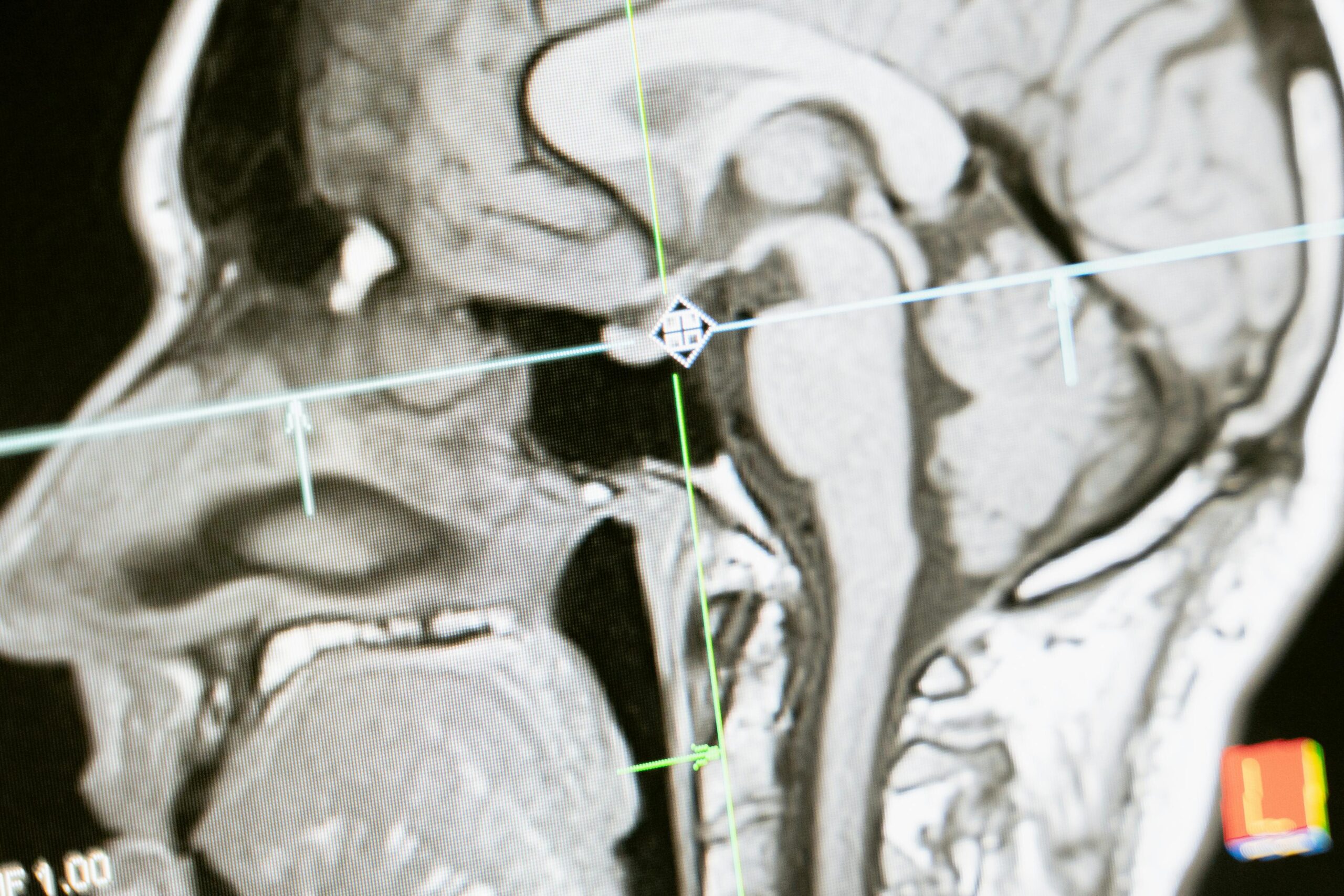
Amplitude maps serve as powerful visualization tools in data analysis, yet misinterpreting them can lead to costly errors and misleading conclusions that impact decision-making processes.

🎯 Understanding the Foundation of Amplitude Mapping
Amplitude maps represent spatial distributions of signal intensity or magnitude across various dimensions, making them essential in fields ranging from seismic analysis to medical imaging. These visual representations transform complex numerical data into comprehensible patterns, allowing analysts to identify trends, anomalies, and critical features within large datasets.
The fundamental principle behind amplitude mapping involves converting raw data values into color-coded or grayscale representations. Each pixel or data point corresponds to a specific amplitude value, creating a visual landscape that reveals patterns invisible in tabular format. Understanding this basic mechanism is crucial before diving into interpretation techniques.
Many professionals underestimate the complexity of amplitude maps, treating them as simple visualizations rather than sophisticated analytical tools requiring careful consideration. This misconception leads to the first major pitfall: approaching interpretation without adequate preparation or contextual knowledge.
⚠️ The Scale Selection Trap
One of the most common errors in amplitude map interpretation involves inappropriate scale selection. The color scale or grayscale range you choose dramatically affects how patterns appear and can either reveal or obscure critical information.
Linear scales work well for data with relatively uniform distributions, but they often fail when dealing with datasets containing extreme outliers. A single anomalous high-amplitude value can compress the entire meaningful range into a narrow color band, rendering subtle variations invisible.
Logarithmic scales offer solutions for datasets spanning multiple orders of magnitude, but they introduce their own challenges. Values near zero become problematic, and the visual representation can exaggerate small differences while minimizing significant ones.
Implementing Adaptive Scaling Strategies
Dynamic range compression techniques help balance the need to display both subtle variations and extreme values. Histogram equalization distributes colors more evenly across the actual data distribution rather than the theoretical range.
Consider implementing percentile-based scaling, where the color range maps to the 5th through 95th percentile of your data. This approach automatically excludes extreme outliers while maintaining sensitivity to meaningful variations.
Always document your scaling choices and test multiple approaches before finalizing interpretations. What appears as a significant feature under one scaling scheme might disappear or transform under another, revealing the subjective nature of visualization choices.
🔍 Spatial Resolution and Sampling Issues
The spatial resolution of your amplitude map fundamentally limits the features you can reliably identify. Attempting to interpret features smaller than twice the sampling interval violates the Nyquist criterion and leads to aliasing artifacts that masquerade as real patterns.
Interpolation algorithms used to create smooth-looking maps from discrete sampling points introduce artificial features. Bilinear, bicubic, and kriging interpolation methods each impose different assumptions about how values vary between sample points.
Understanding your data acquisition grid is essential. Irregular sampling patterns create zones of varying reliability within the same map. Areas with dense sampling provide high confidence, while sparsely sampled regions rely heavily on interpolation assumptions.
Recognizing Interpolation Artifacts
Common interpolation artifacts include bull’s-eye patterns around isolated data points, linear features connecting sparse samples, and artificial smoothing that obscures genuine rapid transitions. These artifacts often appear more regular and geometric than natural features.
Cross-validation techniques help assess interpolation reliability. Temporarily remove known data points and predict their values using surrounding samples. Large prediction errors indicate regions where interpolation is unreliable and interpretations should be cautious.
📊 Color Scheme Selection and Perception Psychology
The human visual system processes different colors with varying sensitivity, making color scheme selection a critical decision that profoundly affects interpretation accuracy. Rainbow color scales, despite their popularity, often introduce perceptual artifacts.
Rainbow scales contain multiple perceptual boundaries where colors transition sharply, such as from blue to green or yellow to red. These boundaries create apparent edges in data that actually varies smoothly, leading observers to identify false discontinuities.
Perceptually uniform color scales like viridis, plasma, and cividis maintain consistent perceptual differences between adjacent colors throughout the range. A given numerical difference appears visually similar whether it occurs in low, medium, or high amplitude regions.
Accessibility and Universal Design Considerations
Approximately 8% of males and 0.5% of females have some form of color vision deficiency, most commonly red-green colorblindness. Using red-green diverging scales makes your maps uninterpretable for millions of potential users.
Grayscale remains the safest choice for universal accessibility, though it sacrifices the ability to represent diverging data with intuitive hot-cold metaphors. Modern colorblind-safe palettes like ColorBrewer schemes provide good alternatives.
Testing your visualizations with colorblindness simulation tools ensures accessibility. Many graphics software packages and online tools allow you to preview how your maps appear to individuals with various forms of color vision deficiency.
🎨 The Context Integration Challenge
Amplitude maps never exist in isolation, yet analysts frequently interpret them without adequate contextual information. Overlaying complementary data layers transforms standalone visualizations into integrated analytical tools.
Geographic features, structural boundaries, or operational parameters often explain apparent amplitude patterns. A seeming anomaly might coincide with a known geological fault, equipment location, or processing boundary, transforming its significance.
Temporal context matters equally. Comparing amplitude maps from different time periods reveals changes that single snapshots obscure. Differencing techniques highlight regions of change while suppressing static background features.
Building Effective Multi-Layer Visualizations
Transparency controls allow overlaying multiple data types while maintaining visibility of underlying features. Setting your amplitude map to 70-80% opacity permits viewing structural or geographic basemaps simultaneously.
Contour lines extracted from amplitude data provide reference frameworks that remain visible when toggling between different visualizations. These persistent guides help maintain spatial orientation during complex analyses.
Coordinated multiple views display the same data region using different parameters, scales, or processing approaches. Side-by-side comparisons reveal features dependent on visualization choices versus robust patterns apparent across multiple representations.
⚡ Signal Processing and Noise Contamination
Raw amplitude data invariably contains noise from measurement uncertainty, environmental interference, and processing artifacts. Distinguishing genuine signal from noise represents a fundamental challenge in amplitude map interpretation.
Random noise creates a grainy or speckled appearance that can obscure subtle genuine features. However, overly aggressive noise suppression through smoothing filters removes real high-frequency information along with noise.
Coherent noise patterns arise from systematic errors, aliasing, or interference. These artifacts often appear as regular stripes, grid patterns, or geometric shapes that might be mistaken for real structural features.
Implementing Intelligent Filtering Strategies
Adaptive filters adjust their behavior based on local signal characteristics, applying strong smoothing in noisy regions while preserving edges and sharp transitions. Median filters effectively suppress speckle noise while maintaining boundaries.
Frequency-domain analysis separates signal components by their spatial frequency. High-frequency content captures fine details and edges, while low-frequency components represent broad trends. Examining these separately clarifies which features are robust.
Statistical significance testing provides quantitative frameworks for assessing whether apparent amplitude variations exceed noise levels. Computing signal-to-noise ratios and confidence intervals prevents over-interpretation of marginal features.
🔬 Quantitative Analysis Beyond Visual Inspection
While visual interpretation provides valuable initial insights, quantitative measurements ensure objective, reproducible analysis. Extracting numerical attributes from amplitude maps supports statistical testing and comparison.
Threshold-based segmentation separates high-amplitude regions from background, but selecting appropriate thresholds requires careful consideration. Automated methods like Otsu’s algorithm determine optimal thresholds from data histograms.
Spatial statistics quantify pattern characteristics beyond subjective assessment. Measures like spatial autocorrelation reveal whether high or low amplitude values cluster or distribute randomly across your map.
Advanced Feature Extraction Techniques
Texture analysis characterizes the spatial arrangement and variation of amplitude values within regions. Parameters like entropy, homogeneity, and contrast provide numerical descriptions of visual patterns.
Gradient analysis identifies edges and transitions by computing rate-of-change in amplitude. Steep gradients indicate sharp boundaries, while gentle gradients suggest gradual transitions or measurement uncertainty.
Connected component analysis groups adjacent high-amplitude pixels into discrete features, enabling counting, sizing, and shape characterization. This transforms continuous amplitude fields into discrete object populations suitable for statistical analysis.
📈 Validation and Uncertainty Quantification
Every amplitude map contains uncertainty from measurement error, sampling limitations, and processing choices. Communicating this uncertainty prevents users from treating visualizations as absolute truth rather than models with inherent limitations.
Bootstrap resampling generates multiple plausible amplitude maps from your data by randomly resampling with replacement. Analyzing the variability across bootstrap realizations quantifies interpretation uncertainty.
Ground truth validation against independent measurements provides the gold standard for assessing accuracy. However, perfect ground truth rarely exists, requiring careful consideration of validation data quality and representativeness.
Creating Uncertainty-Aware Visualizations
Displaying confidence intervals or standard deviation maps alongside amplitude values communicates spatial variation in reliability. Regions with high uncertainty warrant cautious interpretation regardless of apparent amplitude patterns.
Ensemble visualization techniques overlay multiple plausible interpretations, revealing stable features that appear consistently versus unstable patterns sensitive to parameter choices. Stable features deserve greater interpretive confidence.
Sensitivity analysis systematically varies processing parameters and visualization settings to assess result stability. Features that persist across reasonable parameter ranges are robust, while those that appear and disappear warrant skepticism.
🛠️ Workflow Integration and Documentation Practices
Amplitude map interpretation rarely occurs in isolation but forms part of larger analytical workflows. Integrating interpretation steps with upstream data processing and downstream decision-making ensures consistency and traceability.
Automated workflows reduce human error and improve reproducibility by standardizing processing steps. However, automation can propagate errors systematically if validation checkpoints are insufficient.
Comprehensive documentation captures parameter choices, scaling decisions, and interpretation rationale. Future analysts reviewing your work, including your future self, require this context to understand and validate conclusions.
Building Reproducible Analysis Pipelines
Version control systems track changes to processing scripts and parameter files, creating audit trails showing how interpretations evolved. This proves essential when revisiting analyses months or years later.
Literate programming approaches interweave code, visualizations, and explanatory text into cohesive documents. These self-documenting analyses communicate methodology while producing results.
Standardized reporting templates ensure consistent documentation of essential metadata: data sources, acquisition parameters, processing steps, visualization choices, and interpretation confidence levels.
💡 Strategic Approaches for Enhanced Interpretation
Developing systematic interpretation protocols improves consistency and reduces bias. Standardized workflows guide analysts through essential steps while maintaining flexibility for domain-specific considerations.
Multi-analyst review processes leverage diverse perspectives and catch individual blind spots. Different observers notice different patterns, and consensus interpretations typically prove more reliable than individual assessments.
Continuous learning from past analyses builds institutional knowledge. Documenting cases where interpretations proved correct or incorrect creates training resources and refines interpretation protocols.
Avoiding Confirmation Bias Traps
Preconceived expectations about what patterns should appear dangerously bias interpretation. Analysts unconsciously emphasize features confirming hypotheses while dismissing contradictory evidence.
Blind analysis protocols prevent bias by withholding hypothesis-relevant information until after initial interpretation. Though impractical in many contexts, partial blinding strategies still provide value.
Devil’s advocate exercises explicitly attempt to develop alternative explanations for observed patterns. If multiple plausible interpretations exist, honest uncertainty acknowledgment becomes essential.

🎓 Cultivating Interpretation Expertise
Expertise in amplitude map interpretation develops through deliberate practice combined with feedback on interpretation accuracy. Novices benefit from structured training emphasizing common pitfalls and diagnostic strategies.
Calibration exercises using synthetic data with known ground truth build interpretive skills without real-world ambiguity. Trainees develop intuition for how various features appear under different conditions and parameter choices.
Domain knowledge integration enhances interpretation by providing physical or operational context for observed patterns. Understanding the underlying phenomena generating amplitude variations prevents purely phenomenological interpretation.
Maximizing accuracy in amplitude map interpretation requires vigilance against numerous potential pitfalls, from fundamental visualization choices to subtle cognitive biases. By implementing systematic approaches that combine careful visual analysis with quantitative validation, analysts transform amplitude maps from simple pictures into rigorous analytical tools supporting confident decision-making.