Amplitude estimation stands at the crossroads of signal processing and quantum computing, where precision meets uncertainty. Mastering this art requires understanding how noise distorts measurements and implementing robust filtering strategies.

🎯 The Foundation: Why Amplitude Estimation Matters
In the realm of signal processing and quantum algorithms, amplitude estimation serves as a cornerstone technique that enables us to extract meaningful information from noisy environments. Whether you’re analyzing audio signals, processing sensor data, or implementing quantum algorithms, the ability to accurately determine amplitude values separates effective solutions from mediocre ones.
The challenge becomes exponentially more complex when noise enters the equation. Real-world signals rarely exist in pristine conditions—electromagnetic interference, thermal fluctuations, quantization errors, and environmental disturbances constantly threaten measurement accuracy. Without proper noise filtering techniques, even the most sophisticated amplitude estimation algorithms can produce unreliable results.
Modern applications demand precision that traditional methods struggle to deliver. From medical imaging systems that diagnose life-threatening conditions to telecommunications networks transmitting critical data, the stakes have never been higher. Advanced noise filtering techniques have emerged as the essential bridge between raw, chaotic data and the clean signals we need for accurate amplitude estimation.
🔍 Understanding the Noise Landscape
Before implementing filtering solutions, we must understand our adversary. Noise manifests in various forms, each requiring specific countermeasures. White noise, characterized by its uniform power spectral density across all frequencies, represents one of the most common challenges. This type of noise affects all frequency components equally, making simple filtering approaches partially effective at best.
Colored noise presents different characteristics. Pink noise, brown noise, and other variants exhibit frequency-dependent power distributions that require tailored filtering strategies. Environmental noise sources often produce colored noise patterns that correlate with specific physical phenomena, providing opportunities for targeted mitigation.
Impulse noise introduces sudden, high-amplitude disturbances that can catastrophically affect amplitude measurements. Common in electrical systems and digital communications, these transient events require specialized detection and suppression techniques. Meanwhile, periodic interference from power lines, switching circuits, or other systematic sources demands notch filtering or adaptive cancellation approaches.
The Statistical Nature of Noise
Statistical analysis reveals patterns within apparent chaos. Gaussian noise follows predictable probability distributions, enabling probabilistic filtering methods. Understanding variance, standard deviation, and signal-to-noise ratio (SNR) provides quantitative metrics for evaluating both noise severity and filter performance.
Non-Gaussian noise distributions require different analytical frameworks. Heavy-tailed distributions, characteristic of impulsive environments, demand robust estimation techniques that resist outlier influence. The choice between parametric and non-parametric statistical approaches significantly impacts filtering effectiveness across different noise scenarios.
⚡ Classical Filtering Approaches Reimagined
Traditional linear filters form the foundation of noise suppression strategies. Low-pass filters attenuate high-frequency noise components while preserving signal content in lower frequency bands. The design parameters—cutoff frequency, filter order, and topology—directly influence both noise rejection and signal distortion characteristics.
Butterworth filters provide maximally flat passband response, making them ideal for applications requiring uniform amplitude characteristics within the signal band. Chebyshev filters trade passband ripple for sharper transition bands, offering superior noise rejection when slight amplitude variations are acceptable. Elliptic filters push this tradeoff further, achieving the sharpest transitions at the cost of ripple in both passband and stopband regions.
High-pass and band-pass configurations address different noise scenarios. When low-frequency drift or baseline wander corrupts measurements, high-pass filters remove problematic components while preserving higher-frequency signal content. Band-pass filters extract signals within specific frequency ranges, simultaneously rejecting both low and high-frequency noise.
Adaptive Filtering: Intelligence Meets Signal Processing
Adaptive filters represent a paradigm shift in noise suppression. Rather than relying on fixed parameters, these systems continuously adjust their characteristics based on signal and noise properties. The Least Mean Squares (LMS) algorithm pioneered this approach, iteratively minimizing the difference between desired and actual filter outputs.
Recursive Least Squares (RLS) algorithms offer faster convergence than LMS at increased computational cost. In dynamic environments where noise characteristics change rapidly, this tradeoff often proves worthwhile. The exponentially weighted nature of RLS provides excellent tracking capabilities, adapting to non-stationary noise sources with remarkable agility.
Kalman filtering extends adaptive concepts into state-space frameworks. By modeling both signal dynamics and measurement noise, Kalman filters achieve optimal estimation in minimum mean square error sense. Extended Kalman Filters (EKF) and Unscented Kalman Filters (UKF) generalize these principles to nonlinear systems, expanding applicability to complex amplitude estimation scenarios.
🧠 Advanced Techniques: Beyond Traditional Boundaries
Wavelet-based filtering exploits multi-resolution analysis to separate signal from noise. Unlike Fourier methods that provide only frequency information, wavelets offer simultaneous time-frequency localization. This property proves invaluable when dealing with transient signals or noise that varies temporally.
The wavelet transform decomposes signals into approximation and detail coefficients at multiple scales. Noise typically manifests in detail coefficients at fine scales, enabling targeted suppression through thresholding techniques. Soft thresholding gradually attenuates small coefficients, while hard thresholding eliminates them entirely. Each approach presents different tradeoffs between noise reduction and signal preservation.
Empirical Mode Decomposition and Intrinsic Functions
Empirical Mode Decomposition (EMD) represents a data-driven approach that requires no predefined basis functions. The algorithm adaptively decomposes signals into Intrinsic Mode Functions (IMFs), each representing different oscillatory components. This flexibility makes EMD particularly effective for non-linear and non-stationary signals where traditional methods struggle.
Ensemble EMD (EEMD) addresses mode mixing issues inherent in basic EMD implementations. By adding white noise realizations and averaging results, EEMD achieves more robust decompositions. The noise-assisted approach paradoxically improves signal clarity, demonstrating how controlled randomness can enhance deterministic outcomes.
📊 Machine Learning Integration for Superior Performance
Deep learning architectures have revolutionized noise filtering capabilities. Convolutional Neural Networks (CNNs) learn hierarchical feature representations that capture complex noise patterns. Unlike hand-crafted filters requiring expert knowledge, CNNs automatically discover optimal filtering strategies from training data.
Autoencoder networks compress signals into low-dimensional latent representations, effectively performing dimensionality reduction that preferentially preserves signal content while suppressing noise. The encoder-decoder architecture learns compact signal representations where noise contributes minimally, enabling clean signal reconstruction from the latent space.
Recurrent Neural Networks (RNNs) and Long Short-Term Memory (LSTM) networks excel at temporal sequence processing. These architectures maintain internal states that capture signal history, enabling context-aware filtering decisions. For amplitude estimation in time-varying environments, this temporal awareness provides significant advantages over memoryless filtering approaches.
Generative Adversarial Networks: A New Paradigm
Generative Adversarial Networks (GANs) introduce a competitive framework where generator and discriminator networks engage in adversarial training. Applied to denoising, the generator learns to produce clean signals from noisy inputs, while the discriminator distinguishes between true clean signals and generated outputs. This competition drives both networks toward increasingly sophisticated capabilities.
The adversarial training paradigm produces remarkably realistic denoised signals that preserve subtle features often lost in traditional filtering. GANs learn the statistical distribution of clean signals, enabling them to fill in details corrupted by noise rather than simply attenuating problematic components.
🎲 Quantum Amplitude Estimation: The Frontier
Quantum amplitude estimation algorithms leverage quantum superposition and interference to achieve quadratic speedups over classical Monte Carlo methods. The Quantum Phase Estimation (QPE) algorithm forms the basis for many quantum amplitude estimation techniques, using controlled operations to extract amplitude information encoded in quantum states.
Noise in quantum systems presents unique challenges. Decoherence, gate errors, and measurement imperfections corrupt quantum information rapidly. Quantum error correction codes and error mitigation strategies become essential components of practical quantum amplitude estimation implementations.
Variational quantum algorithms offer near-term approaches suitable for noisy intermediate-scale quantum (NISQ) devices. These hybrid quantum-classical methods optimize parameterized quantum circuits to perform amplitude estimation tasks, with classical optimization compensating for quantum hardware imperfections.
🔧 Practical Implementation Strategies
Successful noise filtering requires careful consideration of computational constraints. Real-time applications demand low-latency implementations where algorithmic complexity directly impacts feasibility. Fixed-point arithmetic, parallel processing, and hardware acceleration often become necessary for meeting timing requirements.
Filter stability and numerical precision require attention in practical implementations. Finite word-length effects can introduce limit cycles or overflow conditions in recursive filters. Proper scaling, rounding strategies, and coefficient quantization techniques ensure robust operation across diverse input conditions.
Performance Metrics and Validation
Quantitative evaluation separates effective filters from ineffective ones. Signal-to-Noise Ratio (SNR) improvement measures overall noise reduction capability. Mean Square Error (MSE) quantifies estimation accuracy, while Peak Signal-to-Noise Ratio (PSNR) provides scale-normalized performance metrics.
Frequency domain analysis reveals filter characteristics invisible in time domain evaluation. Magnitude and phase response plots expose unwanted resonances, inadequate stopband attenuation, or excessive passband ripple. Coherence functions assess the degree of linear relationship between filter input and output across frequency bands.
🌟 Application-Specific Considerations
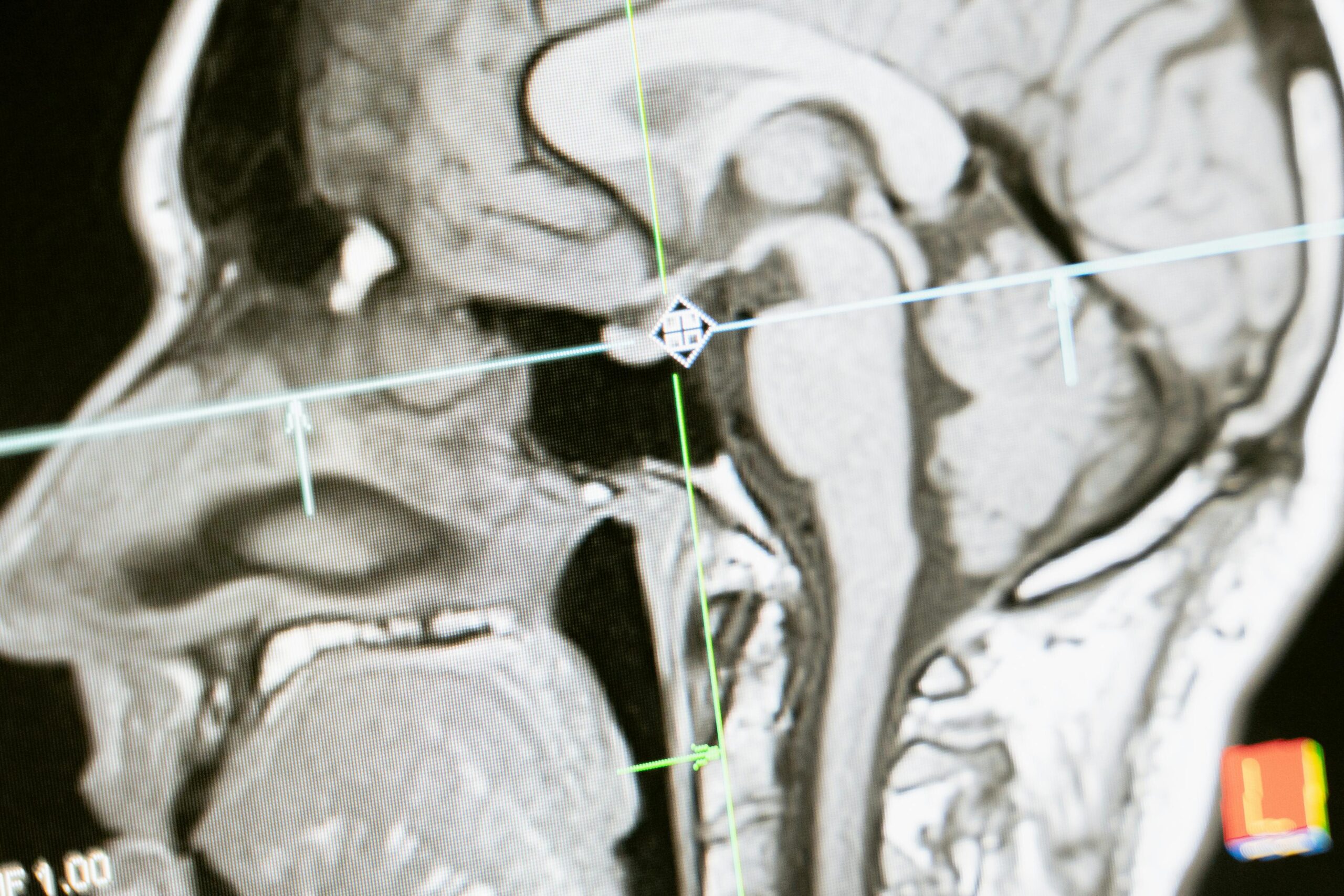
Medical imaging systems require filters that preserve diagnostic information while removing artifacts. MRI and CT scans contain noise from various sources—thermal noise in receivers, quantum noise in detectors, and reconstruction artifacts. Specialized filters balance noise reduction with edge preservation, ensuring pathological features remain visible.
Telecommunications systems face different challenges. Digital modulation schemes require filters that minimize intersymbol interference while rejecting channel noise. Matched filters maximize SNR at sampling instants, while equalizers compensate for channel distortions. The interplay between these components determines overall system performance.
Seismic signal processing demands filters capable of extracting weak signals buried in strong background noise. Array processing techniques combine signals from multiple sensors, using spatial diversity to enhance desired signals while suppressing incoherent noise. Beamforming algorithms steer array sensitivity toward target directions, providing additional discrimination against noise.
💡 Emerging Trends and Future Directions
Edge computing architectures push signal processing toward data sources, reducing latency and bandwidth requirements. Implementing sophisticated filtering algorithms on resource-constrained edge devices requires algorithmic innovations balancing performance with efficiency. Neural network pruning, quantization, and knowledge distillation enable deployment of advanced denoising models in embedded systems.
Federated learning frameworks allow collaborative model training across distributed devices without centralizing sensitive data. Multiple nodes contribute to noise filtering model development while preserving privacy—an increasingly important consideration in medical, financial, and personal data applications.
Physics-informed machine learning combines domain knowledge with data-driven approaches. By encoding physical laws and constraints into neural network architectures, these methods achieve superior generalization with less training data. For amplitude estimation in physical systems, incorporating known dynamics significantly improves filtering performance.

🎯 Synthesizing Knowledge into Practice
Mastering amplitude estimation through advanced noise filtering requires synthesizing diverse techniques into coherent strategies. No single approach dominates all scenarios—success demands understanding the strengths and limitations of each method. Classical filters provide computationally efficient solutions for stationary noise environments. Adaptive techniques excel when noise characteristics change dynamically. Machine learning approaches capture complex patterns that defy analytical modeling.
The path forward involves hybrid architectures combining multiple approaches. Preprocessing stages might employ classical filters for computationally efficient gross noise removal. Adaptive algorithms could track slowly varying noise characteristics. Deep learning models would handle complex, non-linear noise patterns resistant to traditional methods. This layered strategy leverages each technique’s strengths while mitigating individual weaknesses.
Continuous validation against ground truth data remains essential. Simulated environments with known signal and noise characteristics enable controlled testing. Real-world data provides ultimate validation but requires careful interpretation when true amplitudes remain unknown. Cross-validation techniques, bootstrap methods, and ensemble approaches build confidence in filtering performance despite uncertainty.
The journey from chaotic noise-corrupted measurements to precise amplitude estimates demands both theoretical understanding and practical expertise. By embracing diverse filtering techniques and maintaining awareness of emerging developments, practitioners can silence the chaos and extract the clean signals upon which critical decisions depend. The future promises even more sophisticated tools, but fundamental principles remain constant—understand your noise, choose appropriate countermeasures, and validate rigorously.